
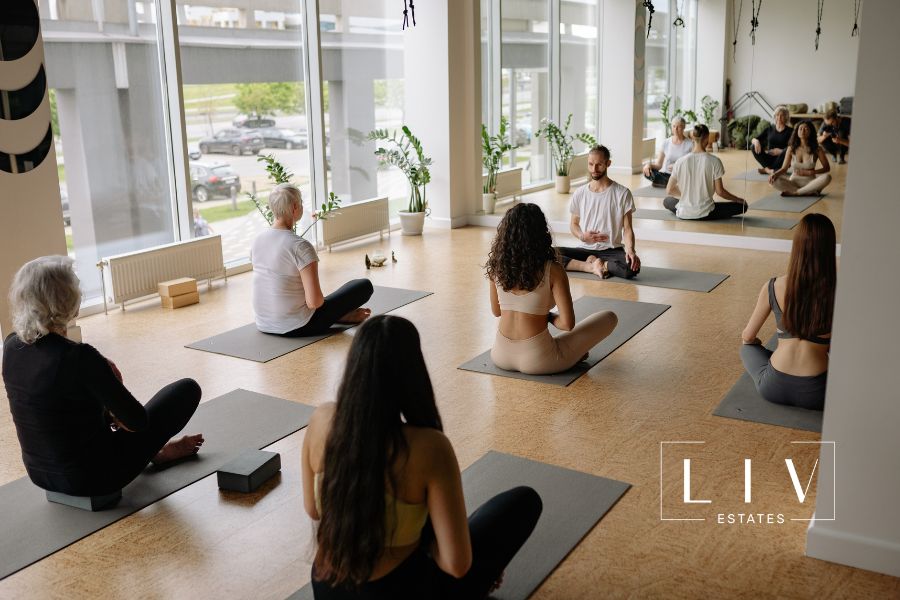
Bangalore has always been a city that moves faster than most people can keep up with. A decade ago, the conversation was about proximity to IT parks and whether a commute was bearable. Five years ago, it shifted toward amenities — a gym, a pool, a park within the gate. Today, in 2026, the conversation has moved further still. Buyers aren’t asking what a development has. They’re asking what kind of life it makes possible.
That shift from features to lifestyle, from square footage to daily experience, is reshaping how Bangalore’s residential market is being built, priced, and chosen.
Before getting into what buyers want, it helps to understand where the market stands. The data heading into 2026 tells a coherent and powerful story.
₹9,800 per sq. ft. is the average city benchmark for Bangalore property in 2026, reflecting a 7.3% year-on-year price increase, one of the strongest appreciation rates among India’s major metros.
63% of total Bangalore residential market share is now captured by homes priced above ₹1 crore, according to JLL India’s 2025 analysis, a dramatic shift from previous years that signals how decisively the city has moved toward premium, value-led housing.
11% is the surge in total inventory value sold in 2026, even as unit volumes saw modest movement, driven entirely by buyers choosing larger, better-specified, amenity-rich homes over entry-level options.
8–10% is the projected price growth for Hebbal and surrounding North Bangalore micro-markets specifically, supported by airport proximity, the incoming Airport Metro line, and concentrated commercial development pressure.
3–5% is the steady rental yield that prime Bangalore residential areas consistently deliver, making this a market where both owner-occupiers and investors can build real, long-term value.
What the numbers confirm is that Bangalore’s residential market in 2026 is not speculative. It is being driven by genuine end-use demand from professionals, families, NRIs, and HNIs who are making considered decisions about where and how they want to live.
1. The Retreat from the Pure Commute Mindset
For most of Bangalore’s growth years, residential decisions were dominated by a single question: how close is this to where I work? The Outer Ring Road, Whitefield, and Electronic City corridors were essentially defined by their proximity to tech parks and not by their liveability.
That calculation has changed fundamentally. The rise of hybrid work, the expansion of metro connectivity into peripheral corridors, and the sheer cost of commuting time in a city with Bangalore’s traffic density have collectively pushed buyers toward a different priority: the quality of the environment they come home to.
The “2BHK near work” mindset is being replaced by a demand for holistic lifestyle ecosystems, a shift visible across every market segment, from mid-income apartments to premium township communities.
2. The Rise of Wellness as a Non-Negotiable
This is perhaps the most defining trend of Bangalore’s 2026 residential market. Wellness amenities in modern homes are no longer the differentiator that separates premium projects from mid-range ones. Buyers are prioritising gated communities for their safety, amenities and practical planning and a swimming pool is not the decision maker anymore. Every day usability is.
The wellness infrastructure that matters to 2026 buyers looks very different from a checklist of facilities. It encompasses:
Buyers are no longer satisfied with just a prime location; they demand homes that offer wellness zones, dedicated home offices, and private open decks, reflecting a strong shift towards holistic living.
3. Mixed-Use Living as the New Community Standard
Mixed-use townships, which combine living, working and leisure spaces, are gaining traction across North Bangalore, Sarjapur Road and peripheral growth corridors — and the reason is practical. When you can meet a colleague at a co-working space within the community, walk to a café for breakfast, and get your groceries without leaving the development, the texture of daily life changes in ways that are difficult to articulate but immediately felt.
This kind of integrated design reduces commute dependency, supports stronger community formation, and provides considerably more resilience to market shifts. Mixed-use developments hold their value better in softer markets because they create genuine ecosystems, not just residential blocks.
Hebbal occupies a distinctive position in Bangalore’s geography and its real estate market reflects that distinctiveness in the price and demand data.
Hebbal has become a prominent real estate hub in North Bangalore, thanks to its strategic location near the Kempegowda International Airport, with the Hebbal flyover ensuring seamless connectivity to areas including Nagawara, RT Nagar, and Yelahanka. Hebbal, near the airport, is emerging as a luxury hub, with high-end projects priced from ₹1.5 Cr to ₹9.25 Cr favoured by frequent flyers and those wanting views and modern gated communities away from city congestion.
But Hebbal’s appeal goes beyond its airport link. The concentration of premium healthcare (Manipal Hospital, Aster CMI), established retail, and the incoming Airport Metro line create a corridor that is simultaneously well-serviced today and structurally positioned for significant further appreciation. North Bangalore’s growth is promising due to its proximity to the International Airport, associated aerospace and tech parks, and upcoming major infrastructure like the Airport Metro line and the Satellite Town Ring Road (STRR).
For community-centric residences in Hebbal specifically, this context matters enormously. Buyers aren’t just purchasing a home: they’re positioning themselves within one of India’s fastest-developing urban corridors at a point when infrastructure investment is still actively compounding in their favour.
Sustainability in real estate has had a long journey from marketing buzzword to buyer expectation. In 2026, sustainable township trends in Bangalore have crossed a threshold: green features are now a baseline requirement for premium buyers, not a bonus that justifies a higher price point.
Here’s what meaningful sustainability looks like at the township level — and why it matters beyond the environmental argument:
| Sustainable Feature | How It Benefits Residents |
| Rainwater harvesting systems | Reduces water costs and community dependency on municipal supply during shortage periods |
| Solar energy integration | Lower common area electricity bills — directly reduces maintenance levies over time |
| Waste segregation and composting | Cleaner community environment; some communities convert compost output into landscaping input |
| EV charging infrastructure | Future-proofs the investment — EV penetration in urban India is accelerating rapidly |
| Passive ventilation design | Reduced AC dependency, better indoor air quality, and meaningfully lower energy bills |
| Green-certified construction | IGBC or LEED certification is an increasingly cited criterion in resale and rental decisions |
People who buy homes are now increasingly concerned about the environmental sustainability of their buildings. Projects with green certifications that collect rainwater, utilise solar power, separate waste, and conserve energy are becoming the norm.
Alongside wellness and sustainability, technology integration has moved from a premium feature to an expectation in Bangalore’s mid-premium and luxury segment. In 2026, “tech-enabled” means integrated community management. Buyers are demanding app-based control for everything from visitor management to HVAC scheduling and EV charging station availability.
In practical terms, this means:
For residents: App-controlled lighting, security, climate management, and building services. Visitor management handled digitally. Package tracking. Parking management without physical intervention.
For community management: Real-time data on energy consumption, maintenance scheduling, and security events, enabling faster response and better resource allocation across the township.
For investors: IoT-integrated properties have demonstrably stronger rental appeal among Bangalore’s tech-sector professional demographic, who expect the same quality of digital experience in their homes as they have in their workplaces.
Beyond lifestyle, the investment case for community-centric, wellness-focused developments in 2026 Bangalore is genuinely compelling and grounded in hard market data.
Here’s why this segment specifically outperforms:
Rental demand is structural, not cyclical. Bangalore’s rental market remains one of the strongest in India, fed by steady migration from professionals in IT, aerospace, biotech, and startups. Community-rich developments with wellness amenities command a significant premium in rental negotiations, tenants increasingly choose on lifestyle, not just location.
Premium projects are absorbing a growing market share. While overall unit sales saw a marginal dip, the total value of sold inventory surged by 11%, driven by future-ready and amenity-rich homes. The segment that Liv Estates operates in is specifically where market momentum is concentrating.
North Bangalore’s appreciation cycle is early. Unlike south and east corridors where price discovery is mature, Hebbal and its surrounding catchment are still appreciating into their infrastructure. Buyers entering now are capturing value that infrastructure investment has not yet fully priced in.
NRI demand is adding sustained premium pressure. NRIs are attracted by the depreciating rupee, high rental yields, transparent RERA regulations, and the desire for retirement homes in a tech-forward city — and North Bangalore, with its airport connectivity, is a natural anchor for this buyer group.
Liv Estates, headquartered at Hebbal Kempapura in North Bangalore, is building at the intersection of precisely the trends shaping the city’s residential future- modern, sustainable homes in prime locations, with a sharp focus on what elevates the daily experience of living in them.
The flagship Gentry Residences project represents what urban living in Bangalore’s premium corridor looks like when it’s designed with intention: not just a residential building within a postcode, but a considered community in a location where infrastructure, connectivity, and quality of environment compound together.
For home buyers, the value proposition is lifestyle-first: a residence designed for how Bangalore’s professionals, families, and returning NRIs want to live in 2026- connected, healthy, community-oriented, and sustainable.
For investors, the fundamentals speak clearly: a high-growth micro-market, a rental-demand-rich catchment, and a project category- premium, amenity-rich, sustainably designed, that is directly aligned with where Bangalore’s residential market is concentrating its value.
Bangalore’s real estate growth cycle in 2026 is not speculative momentum. It is infrastructure-backed, employment-anchored, and driven by a buyer population that is more informed and considered than at any previous point in the city’s history. In that environment, the premium that well-located, wellness-focused, community-centric developments command is not a luxury premium, it reflects what the market now recognises as genuinely better.
The buyers who move early in this cycle are the ones who capture the appreciation that later market entrants will pay at a premium to access.
To explore the Gentry Residences and Liv Estates’ upcoming projects in Bangalore, visit livestates.in, call +91 77604 67613, or reach the team at contact@livestates.in. Offices at WeWork Latitude, Hebbal Kempapura, Bangalore 560024.